Top 7 San Diego Software Development Companies [2026]

Slava Khristich


Vlad Nazarov
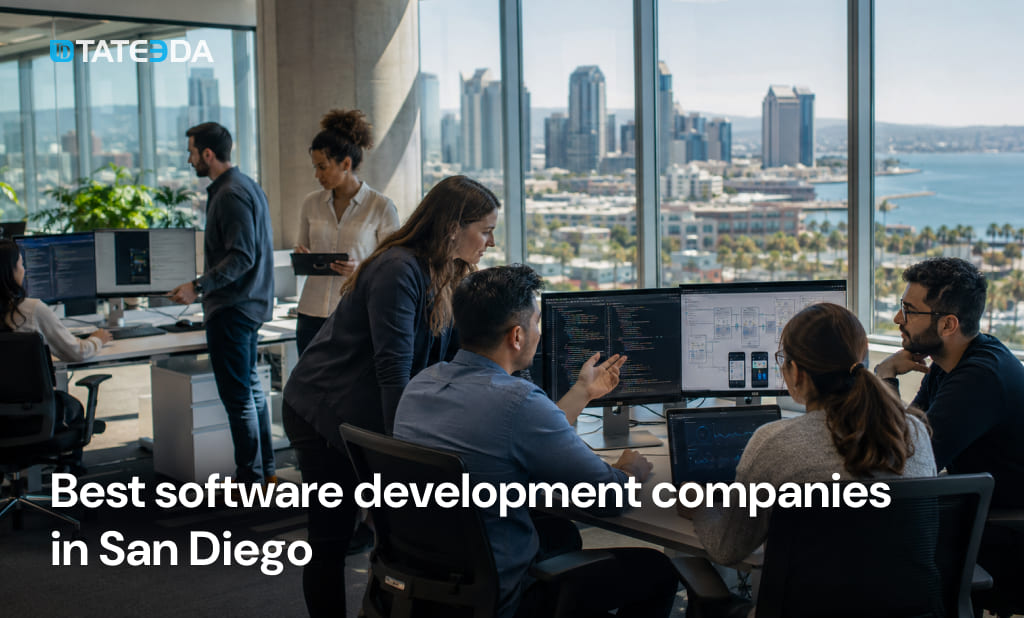
San Diego has a substantial software engineering market shaped by several industries that place unusual demands on technology: healthcare, biotech, life sciences, medical devices, defense, telecommunications, SaaS, cybersecurity, and data-intensive business systems.
If you want to find a reliable tech partner or hire software developers in San Diego, California, your options go beyond a conventional web development agency. Many local firms work across cloud engineering, mobile applications, enterprise software, artificial intelligence, IoT, data platforms, and regulated software.
This guide reviews seven San Diego software development companies with different strengths, team structures, and technical specializations. The goal is to help you identify which type of vendor fits your project, particularly if you are looking for custom healthcare software development, AI integration, enterprise modernization, or a long-term engineering team.
San Diego itself provides a strong technical setting for this work. The San Diego Regional EDC reports more than 3,600 technology companies in the region. Its software sector accounts for 28,617 jobs across 2,949 establishments, while the broader technology sector includes more than 63,000 jobs. San Diego is also a top-three U.S. life-sciences market with almost 60,000 life-sciences jobs, creating an unusually close relationship between software engineering, healthcare, biotech, medical devices, and scientific R&D.
| Please note: ✔️ This list of software and mobile app development companies in San Diego includes companies headquartered in San Diego or the greater San Diego metropolitan area, as well as companies with an established local office. ✔️ The companies appear in no particular ranking order. They were selected by our editors based on their San Diego presence, software engineering capabilities, industry experience, project portfolio, and publicly available company information. ✔️ The purpose of this list is not to endorse, formally compare, or rate these vendors. It is intended to help businesses researching San Diego software development companies and looking to hire a custom software development provider in San Diego or Southern California. ✔️ We try to keep company information current. If you notice an incorrect address, service description, company detail, or other reference, please contact us at [email protected]. ✔️ If you represent one of the companies listed here and would like us to correct, expand, or remove your company information, please contact us. |
Table of Contents
The Best Software Development Companies in San Diego
Why look for software developers in San Diego?
The answer goes beyond geography. San Diego combines a substantial software workforce with healthcare, biotechnology, medical-device, telecommunications, defense, and scientific organizations that routinely require sophisticated custom applications. The region also contains major universities and research organizations, including UC San Diego and San Diego State University, which contribute engineering and scientific talent.
For buyers, however, there is no single definition of the “best software development company in California.” A medical SaaS company, a logistics startup, and an enterprise replacing a legacy ERP system may need completely different engineering partners.
Useful selection criteria include:
- Industry and domain experience
- Web, mobile, cloud, data, IoT, and AI capabilities
- Experience integrating with existing software
- Software architecture skills
- Cybersecurity and privacy practices
- QA and automated testing
- Access to senior engineers
- Project management model
- Team location and employment model
- Experience with HIPAA, CCPA, FDA requirements, or other applicable regulations
- Evidence from comparable customer projects
- Pricing and contract structure
Here are seven software development companies in San Diego worth considering.
| Company | San Diego presence | Areas of particular relevance |
|---|---|---|
| TATEEDA GLOBAL | Headquarters | Healthcare software, health tech, biotech, pharma, AI integration, IoMT, web/mobile/cloud development, staff augmentation |
| Seamgen | San Diego | Digital products, UX/UI, mobile/web development, healthcare, AI |
| Simform | San Diego office | Product engineering, cloud, AI, data, healthcare |
| The Smyth Group | Greater San Diego, Vista | Custom software, mobile applications, enterprise systems, private AI |
| EffectiveSoft | San Diego presence | Enterprise software, healthcare, data, AI, IoT |
| HyperTrends Global | San Diego | SaaS products, AI agents, cloud applications, remote patient monitoring |
| Nisman Solutions | San Diego | Custom software, web/mobile applications, systems integration |
#1. TATEEDA GLOBAL: Healthcare Software Development Company in San Diego
| Location: 7220 Trade St, Suite 103 | Website: https://tateeda.com/ |
| Phone: +1 (619) 630-7568 | Email: [email protected] |
Primary industries: Healthcare, healthtech, biotech, pharmaceutical, medical staffing, IoT/IoMT
Core services: Custom software development, healthcare software, AI development and integration, mobile apps, web platforms, EHR/EMR integration, medical billing software, patient portals, cloud engineering, QA, staff augmentation
⚙️ Technologies: Angular, React, Vue.js, JavaScript/TypeScript, Node.js, C#/.NET, Java, Python, PHP, Flutter, PostgreSQL, MySQL, Microsoft Azure, AWS, Google Cloud, Docker, and Kubernetes.
AI: OpenAI, Microsoft Foundry/Azure OpenAI, Amazon Bedrock and SageMaker AI, Google Vertex AI, IBM watsonx, Anthropic Claude, TensorFlow, PyTorch, and Hugging Face.
Hourly rate: $50 – $99/hour
Healthcare Software for Regulated Environments
TATEEDA GLOBAL is a custom software development company based in San Diego with a particularly strong concentration of projects in healthcare and other regulated or data-sensitive industries.
Its custom healthcare software development work includes EHR/EMR-connected systems, patient portals, telehealth applications, medical billing and revenue-cycle software, pharmacy systems, healthcare staffing platforms, remote patient monitoring, LIMS applications, IoMT products, and custom business software for pharmaceutical and biotech organizations. The team also works with HL7 and FHIR integrations and develops software for HIPAA-regulated environments.
AI Integrated with Existing Healthcare Systems
AI is a significant part of this engineering mix. Through its custom AI software development services, TATEEDA builds medical AI agents, AI-backed analytics, conversational assistants, document-processing workflows, clinical and administrative automation, and AI functionality connected with existing EHR/EMR, billing, CRM, ERP, and IoT systems. Its approach is therefore closer to custom product engineering with AI embedded inside operational software than to creating isolated AI prototypes that sit apart from a client’s existing systems.
This combination can be especially relevant to California healthcare companies. HIPAA-related engineering, PHI handling, California privacy requirements, healthcare interoperability, medical-device integrations, and AI governance can influence architecture, data flows, access controls, APIs, and infrastructure from the beginning of a project. TATEEDA’s healthcare offering explicitly covers HIPAA-focused development, FHIR/HL7 interoperability, IoMT, EHR/EMR integrations, cloud software, and AI workflows.
San Diego Presence with Distributed Engineering Resources
TATEEDA combines its San Diego headquarters with distributed engineering resources across multiple countries. This model gives U.S. clients local business and project contacts while providing access to a broader pool of senior software engineers for development, QA, architecture, cloud, DevOps, mobile, data, and AI work. For companies in California and elsewhere in the U.S., it can also reduce dependence on Southern California’s local engineering labor market when assembling larger or longer-term development teams.
TATEEDA GLOBAL Project Examples
➡️ Healthcare Staffing Software for AYA Healthcare
TATEEDA has participated in a long-term engineering engagement for AYA Healthcare, covering financial reporting automation, time tracking, mobile applications for different user groups, and a portal for hospitals and healthcare-system representatives.
➡️ La Maestra Community Health Centers
TATEEDA developed iOS and Android software plus a web administration portal for La Maestra Community Health Centers in San Diego. The application gives patients access to clinic locations, services, appointments, test results, and secure communication while allowing authorized staff to manage content from a web interface.
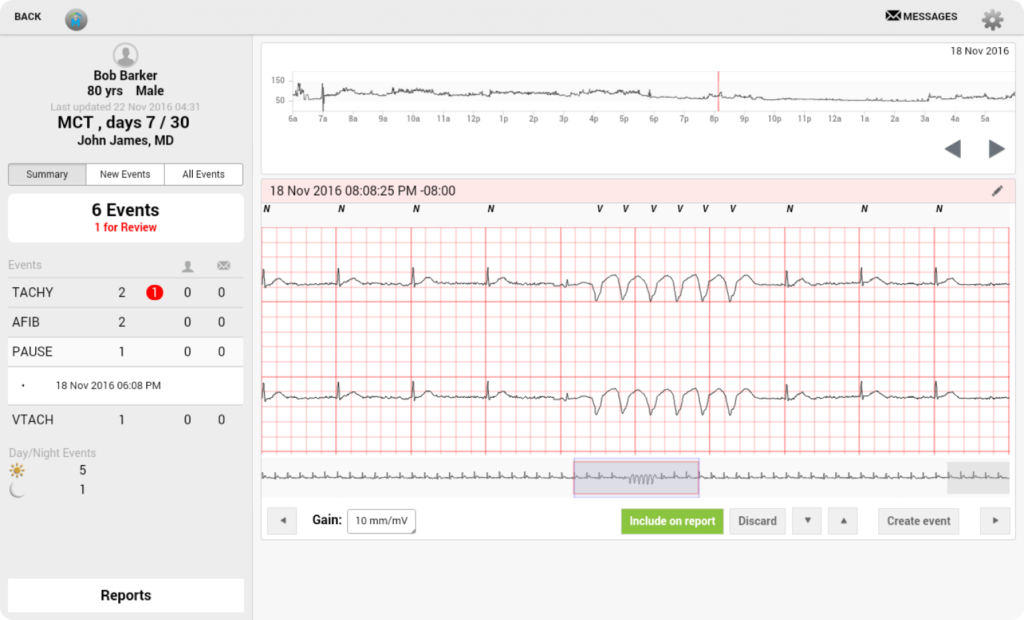
➡️ VentriLink Remote Heart Monitoring
For California-based VentriLink, TATEEDA developed a mobile component of an IoMT remote heart-monitoring system. The application works with server-side infrastructure connected to a wearable biosensor and gives healthcare professionals access to detailed ECG data on mobile devices.
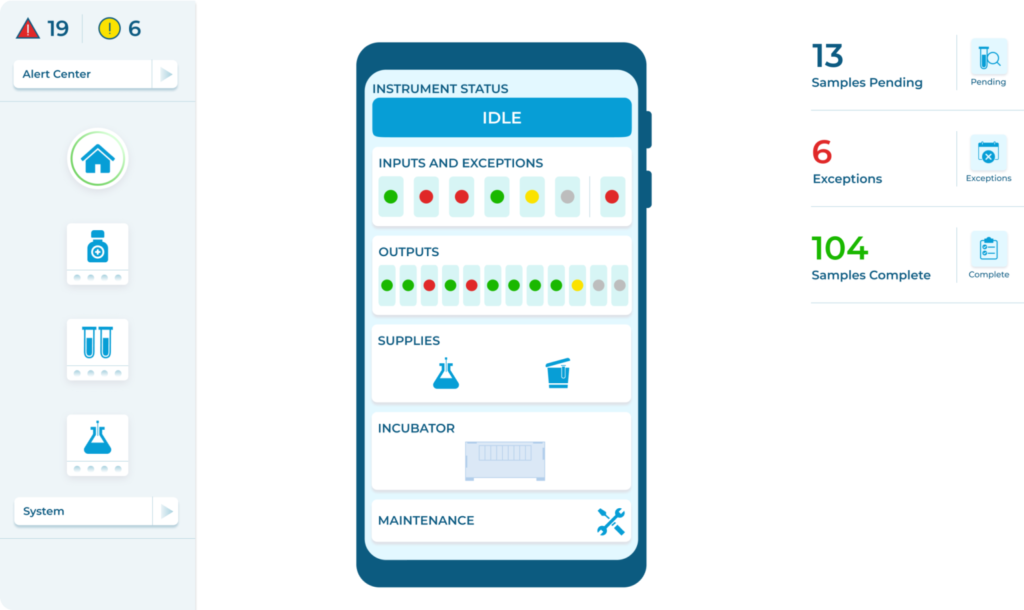
For Southern California pharmacy SCRx, TATEEDA worked on back-end development, cloud and third-party API integrations, pharmacy claims workflows, medication fulfillment, bulk PDF processing, OCR, alerts, notifications, and related automation within an existing pharmacy management system.
Best fit: Healthcare providers, healthtech companies, medical SaaS vendors, biotech and pharmaceutical organizations, IoMT businesses, and U.S. companies looking for a San Diego healthcare software development partner combined with distributed senior engineering resources.
#2. Seamgen
| Location: 13500 Evening Creek Dr. N, San Diego, CA 92128 | Website: https://www.seamgen.com/ |
| Phone: +1 619-818-0516 | Email: [email protected] |
Primary industries: Healthcare, automotive, hospitality, enterprise technology
Core services: Custom web development, mobile apps, UX/UI, AI and data science, cloud applications, connected healthcare, IoT
Seamgen is a San Diego digital product company with a strong emphasis on combining product design, UX, and full-stack software engineering.
Its current service portfolio spans mobile and web applications, cloud software, AI, data science, connected systems, and healthcare application development. In healthcare, Seamgen specifically works with HIPAA-related development, HL7/FHIR interoperability, billing systems, e-prescribing, telehealth, and digital patient experiences.
AI capabilities include machine learning, natural-language processing, predictive analytics, data-oriented automation, and intelligent application functionality. Seamgen’s broader engineering model makes it a reasonable candidate for organizations that want AI to be one component of a complete digital product rather than the entire engagement.
Seamgen operates with the backing of Itility Group, which holds a majority stake in the company. The relationship brings additional data, cloud, AI, and managed-technology capabilities into Seamgen’s delivery portfolio.
Its public healthcare portfolio includes work associated with organizations such as ZOLL, ActiveHealth, Solara Medical, and other healthcare businesses.
Best fit: Companies that place substantial weight on UX, mobile/web product design, connected applications, and front-end experience alongside software engineering.
Seamgen’s Project Example:
➡️ Pre-login Pages for the Kia Owner’s Portal
Seamgen created pre-login pages for the Kia owner’s portal and provided ongoing support for existing Kia owners’ portal designs. The Seamgen team delivers regular updates to improve the functionality of the platform across all operating systems and browsers. As stated on their website:
“Drivers can now track fuel consumption, average speed, range, and set geofences around specific locations…“
#3. Simform
| Location: 2305 Historic Decatur Rd, Suite 100, San Diego, CA 92106 | Website: https://www.simform.com/ |
| Phone: +1 321-237-2727 | Email: [email protected] |
Primary industries: Healthcare, financial services, technology, retail, logistics, SaaS
Core services: Product engineering, cloud engineering, data and AI, generative AI, agentic AI, DevSecOps, software modernization
Simform is a considerably larger engineering organization than many companies in this list. Its headquarters are in Orlando, with offices in several U.S. cities, including San Diego. Clutch lists its San Diego location at Liberty Station on Historic Decatur Road.
The company works across product engineering, cloud infrastructure, enterprise applications, AI/ML, generative AI, and increasingly agentic software engineering. Its AI services include multi-agent systems, enterprise knowledge integration, AI-assisted software development, ML models, workflow agents, and AI governance mechanisms.
Healthcare is one of Simform’s established verticals. Its public healthcare capabilities include telehealth, EHR/EMR development, medical IoT, clinical decision-support software, healthcare data systems, HL7, FHIR, and HIPAA-related application development.
Its size makes Simform more comparable to a broad engineering partner than a compact San Diego agency. That can be attractive for enterprise programs requiring multiple disciplines, large delivery teams, cloud engineering, and extensive AI or data work.
Best fit: Larger product-development programs, enterprise modernization, cloud initiatives, healthcare applications, and organizations requiring significant engineering capacity.
Simform’s Project Example:
➡️ Insurance Management Solutions with Telematics
Simform created an IoT-powered fleet-tracking solution for a large Scandinavian insurance company. With this solution, fleet operators and drivers track vehicle status and driving behaviors with telematics technology. Insurers can acquire important information about accidents in real-time and react rapidly, as required by protocol.
#4. The Smyth Group
| Location: Vista, CA, San Diego County | Website: https://thesmythgroup.com/ |
| Phone: (225) 910-7789 | Email: [email protected] |
Primary industries: Healthcare, retail, logistics, automotive, business services, SaaS
Core services: Custom software, mobile apps, enterprise applications, UX/UI, integrated AI, software audits, cloud operations
The Smyth Group, or TSG, is a custom software company headquartered in San Diego County with a predominantly U.S.-based distributed team. Its current services cover mobile applications, enterprise software, SaaS, web systems, UX/UI, cloud operations, diagnostics, machine learning, and integrated AI.
One distinguishing characteristic is team geography. TSG states that roughly 95 percent or more of its workforce is U.S.-based, depending on the current company page. That can matter to clients that explicitly require domestic engineering personnel or closer overlap with U.S. working hours.
The company also takes a comparatively cautious approach to generative and agentic AI. Its own 2026 material discusses the usefulness of AI coding tools while emphasizing engineering supervision, verification, security, and the limits of unsupervised “vibe coding.”
The Smyth Group Project Example
➡️ Integrity Billing
TSG developed a healthcare insurance benefits-verification application for Integrity Billing. According to the company’s case study, the web application reduced time required to verify benefits by 36 percent while bringing multiple data sources into a single workflow.
Best fit: Organizations that prefer an overwhelmingly U.S.-based team, product strategy combined with engineering, custom enterprise applications, and UX-heavy projects.
#5. EffectiveSoft

| Location: 4445 Eastgate Mall, Suite 200, San Diego, CA 92121 | Website: https://www.effectivesoft.com/ |
| Phone: +1 800-288-9659 | Email: [email protected] |
Primary industries: Healthcare, life sciences, financial services, enterprise software
Core services: Custom software, AI agents, generative AI, cloud, data engineering, healthcare applications, medical-device software, software modernization
EffectiveSoft is an established software engineering company with a San Diego office and a distributed international delivery organization. Public company information places its founding in 2003 and describes a team of several hundred specialists.
The company’s current service mix includes custom development, AI agents, AI consulting, generative AI, cloud services, data engineering, enterprise modernization, mobile development, and AR/VR.
Healthcare is one of its stronger industry practices. EffectiveSoft works on EHR/EMR software, medical websites and portals, patient-management systems, healthcare CRM products, medical-device connectivity, virtual care, diagnostics, clinical data platforms, and life-sciences systems. Its healthcare materials reference HIPAA, PHI protection, HL7, FHIR, CCPA, GDPR, and ISO/IEC 27001:2022.
EffectiveSoft Project Example
➡️ Enterprise Virtual Care Platform
EffectiveSoft’s portfolio includes a virtual-care platform involving microservices, HL7-based data exchange, video consultation infrastructure, single sign-on, access controls, scheduling, analytics, and EHR/EMR integration.
Best fit: Mid-sized and enterprise organizations that require a broad engineering vendor with healthcare, AI, cloud, data, and regulated-software experience.
#6. HyperTrends Global
| Location: 3687 4th Ave, Suite 103 | Website: https://www.hypertrends.com/ |
| Phone: 1-800-626-3503 | Email: [email protected] |
Primary industries: SaaS, healthcare, finance, education, e-commerce
Core services: Custom software, SaaS engineering, cloud applications, web and mobile development, AI agents, LLM integration, enterprise AI architecture
HyperTrends Global is a San Diego software company focused on custom applications, SaaS products, cloud engineering, product strategy, and AI.
Its current AI work extends into LLM integration, agent systems, adaptive interfaces, enterprise AI architecture, and intelligent automation. Rather than limiting AI work to chat interfaces, HyperTrends discusses data architecture, software modernization, cloud foundations, and application design as part of deploying AI in operational systems.
Healthcare is also represented in its current technical material. HyperTrends discusses HIPAA-related AI architecture, healthcare SaaS, FHIR integrations, clinical decision-support systems, legacy modernization, and machine-learning deployment around PHI.
The company is considerably smaller than firms such as Simform or EffectiveSoft, which may appeal to businesses seeking more direct involvement from senior technical leadership.
Best fit: SaaS companies, startups, SMBs, AI integration projects, and businesses looking for architecture-heavy technical consulting combined with implementation.
HyperTrends Global’s Project Example:
➡️ Web Portal for College Students
HyperTrends helped NRCCUA by designing and developing a set of web applications and tools for student admissions management and a student website. Functions included Lead Delivery, Content Management Systems (Kentico CMS), the Education & Scholarship Research platform, and many other helpful online education solutions.
#7. Nisman Solutions
| Location: 9625 Black Mountain Rd, Suite 315, San Diego, CA 92126 | Website: https://www.nismansolutions.com/ |
| Phone: +1 619-630-7528 | Email: [email protected] |
Primary areas: Custom business software, web applications, systems integration, mobile applications, e-commerce
Core services: Software architecture, custom development, IT consulting, system integration, web/mobile applications
Nisman Solutions is a smaller San Diego engineering company centered on custom application development and systems integration.
Its service portfolio includes custom enterprise software, architecture and IT consulting, web applications, mobile applications, e-commerce systems, and integrations. Technologies publicly listed by the company include C++, C#, Python, .NET, Django, Hadoop, and other web and enterprise tools.
Compared with several other companies in this list, Nisman presents itself more as a traditional custom engineering and integration specialist than an AI-first consultancy. That distinction can be useful. Many business projects still revolve around replacing fragmented software, connecting data sources, improving internal applications, or extending existing enterprise systems rather than introducing AI everywhere.
One of the company’s public testimonials comes from Illumina, whose representative describes Nisman Solutions integrating disparate data sources and turning loosely defined requirements into working internal tools.
Best fit: Small and mid-sized businesses requiring hands-on software architecture, custom applications, .NET-oriented engineering, or difficult system integrations.
Nisman Solutions’ Project Example:
➡️ Insurance Payment Processing Solution for Healthcare
Nisman Solutions helped their client to build a .NET-powered system that allows them to:
“…streamline the payment of claims from insurance companies to hospitals and billing firms using technology solutions.”
Extra: Kromeon
| Location: 155 S Highway 101, Solana Beach, CA 92075 | Website: https://kromeon.com/ |
| Phone: 1-888-882-0865 | Email: [email protected] |
Kromeon is a smaller San Diego County software development company based in Solana Beach. Its current offering combines custom web and mobile engineering with SaaS development, AWS cloud services, AI integration, ERP work, and medical-device software. The company says it has launched more than 625 mobile applications, while its current portfolio covers healthcare, transportation, education, SaaS, and other business applications.
Healthcare is a substantial part of its public profile. Kromeon describes medical-device software development that can include architecture, UI design, HIPAA- and FDA-related engineering requirements, testing, and integration with EHR and ADT systems. Clutch currently identifies medical projects as its largest industry category.
AI has also become a visible part of Kromeon’s service portfolio. Its AI services cover data pipelines, LLM and model integration, custom model tuning, intelligent assistants, document processing, predictive functions, and workflow automation incorporated into existing software products.
Kromeon Healthcare Project Example: Dexcom Mobile App
Kromeon’s portfolio includes an iOS and Android project associated with Dexcom’s continuous glucose monitoring technology. According to the company’s case study, the team worked on a mobile application connected with the Dexcom G5 CGM system, allowing users to view continuous glucose readings, monitor fluctuations, receive notifications, and share glucose information. The engagement included frontend development, prototyping, medical-device integration, QA, and mobile application development.
Best fit: Startups and mid-sized companies looking for a relatively small San Diego County development partner for mobile applications, SaaS, AWS projects, medical-device software, or AI functionality integrated into an existing product.
Conclusion
These San Diego software development companies are just a small snapshot of a large and flourishing sector that includes thousands of agencies and vendors for healthcare software development, e-commerce, education, real estate, and transportation.
| ⚠️Some of these software designing companies might be out of business or have acquired negative reviews. It is recommended that you check their backgrounds on Clutch or GoodFirms and use the tips provided in the following sections before contacting them. |

What Should a Software Development Company Offer in 2026?
The boundaries between conventional software engineering and AI development are becoming less useful.
A company may ask for a customer portal, billing application, internal SaaS platform, EHR module, or logistics system and discover that several functions can benefit from AI: document extraction, search, classification, anomaly detection, summarization, workflow agents, conversational interfaces, or predictive analytics.
That does not mean every software project should become an AI project.
A capable software partner should be able to distinguish between:
- deterministic business logic that belongs in conventional code;
- AI-assisted functions where probabilistic output is acceptable;
- workflows where human review must remain mandatory;
- data that can be supplied to an external model and data that cannot;
- RAG, model APIs, fine-tuning, smaller specialized models, and conventional search;
- prototypes that demonstrate feasibility and production systems that need auditability, monitoring, security, and cost controls.
This distinction becomes particularly important in healthcare. AI working with clinical information, claims, PHI, medical devices, or clinical decision support can create requirements far beyond those of a conventional chatbot.
HIPAA, CCPA, PAGA, and California Software Projects
Companies looking for software development services in California should identify applicable regulatory and legal requirements before development begins.
These rules do not all function in the same way.
HIPAA and Healthcare Software
HIPAA directly influences software architecture when an application creates, receives, maintains, or transmits PHI on behalf of a covered healthcare organization.
Depending on the system, this can affect authentication, role-based access, encryption, audit records, infrastructure configuration, backups, data retention, logging, APIs, incident procedures, and third-party services.
The role of software vendors is not theoretical. In March 2026, the HHS Office for Civil Rights announced a HIPAA settlement involving software company MMG Fusion, identifying the company as a business associate because it received PHI from covered entities and its software communicated with patients.
For healthcare buyers, therefore, “we know HIPAA” should never be enough. Ask prospective developers how they handle PHI, infrastructure, access, logging, testing, subcontractors, cloud services, and Business Associate Agreements where applicable.
CCPA and CPRA Requirements
California privacy requirements can also affect software processing personal information.
California’s privacy regulator finalized additional CCPA regulations covering areas such as risk assessments, cybersecurity audits, and Automated Decisionmaking Technology. The regulations took effect January 1, 2026, although individual requirements have different compliance dates and applicability criteria. ADMT requirements concerning significant decisions, for example, begin in 2027.
Software teams building consumer platforms therefore need to consider data collection, consent, access and deletion workflows, retention, third-party transfers, privacy configuration, and automated decision-making where applicable.
PAGA Is Different
The California Private Attorneys General Act, or PAGA, is an employment-law enforcement mechanism, not a software security or privacy standard.
California’s Department of Industrial Relations explains that PAGA allows aggrieved employees to pursue civil penalties for Labor Code violations on behalf of the state. Reforms enacted through AB 2288 and SB 92 changed several PAGA provisions and the cure process.
Why can this matter in a software-development context?
If a company is creating workforce management, time tracking, scheduling, payroll, healthcare staffing, break-management, or other employee-facing systems for California employers, the product may need to correctly represent business rules arising from California wage-and-hour law. Separately, companies using staff augmentation in California should pay attention to their employment arrangements.
PAGA itself should not be presented as a software certification.
FDA Requirements for Certain Healthcare Products
HIPAA compliance alone does not answer whether healthcare software falls within FDA oversight.
In January 2026, the FDA issued final guidance on Clinical Decision Support Software clarifying which CDS functions may be excluded from the statutory definition of a medical device and which software functions can remain subject to device regulation. FDA also maintains separate guidance covering medical-device cybersecurity, software functions, AI-enabled devices, and software assurance.
If your application diagnoses, recommends treatment, controls a medical device, or performs other clinically significant functions, regulatory classification should be determined before architecture and product requirements are locked down.
How Much Does It Cost to Hire a Software Development Company in San Diego?
The cost of hiring a custom software development company in San Diego depends heavily on what you are building and how the engagement is structured.
Public agency profiles already demonstrate how wide the market can be. Clutch currently places Seamgen and EffectiveSoft in the $50-$99/hour band, while The Smyth Group appears in the $150-$199/hour band. These marketplace figures are useful as directional indicators, but they should not be treated as vendor quotes or universal San Diego market rates.
The biggest cost factors include:
- Number of applications, screens, and user roles
- Web, iOS, Android, desktop, or embedded components
- Legacy code that must be analyzed or replaced
- APIs and third-party integrations
- EHR/EMR, FHIR, HL7, X12, or medical-device integration
- Cloud infrastructure
- Data migration
- AI and machine-learning functionality
- Model inference and AI infrastructure costs
- Security requirements
- Compliance work
- Automated and manual QA
- DevOps
- UX research and product design
- Number and seniority of engineers
- Required delivery schedule
- Post-release maintenance
A relatively compact internal application with several standard integrations is a fundamentally different engagement from an AI-enabled healthcare platform handling PHI, medical-device data, EHR records, billing transactions, and multiple user groups.
Local Team or Distributed Team?
A fully local San Diego engineering team can be attractive for projects requiring frequent on-site collaboration, but local engineering labor is expensive.
For that reason, some software development companies in San Diego combine U.S.-based project leadership, product management, architecture, or customer-facing roles with engineering teams in other U.S. states, Latin America, Europe, or Asia.
There is nothing inherently problematic about that model. In many cases, it provides access to a larger talent pool and better project economics.
The important issue is transparency.
Before signing a contract, ask:
- Who will actually write and review the code?
- Are engineers employees, contractors, or subcontractors?
- Where will they work?
- Who can access production data?
- Can subcontractors access PHI or other sensitive information?
- How are credentials and source repositories controlled?
- Who owns the source code?
- Can team members be replaced without your approval?
- What security obligations apply to every person on the project?
For regulated software, these questions can matter as much as the hourly rate.
The 10 Steps to Choosing the Best Software Development Company in San Diego
Choosing a software partner should begin with the problem and operating environment, not with a favorite technology.
1. Define the business problem first
Document the users, workflows, business goals, integrations, sensitive data, and existing systems before deciding that you “need React,” “need microservices,” or “need AI.”
A competent engineering vendor should be able to challenge premature technical assumptions.
2. Shortlist companies with relevant project evidence
Look at Clutch, company portfolios, Google business profiles, technical articles, customer references, and case studies.
A long list of technologies tells you less than a detailed project involving the same type of users, data, or integrations as your system.
3. Check domain experience
This becomes especially important in healthcare, biotech, pharma, fintech, logistics, and other specialized industries.
Developers can learn a new technology relatively quickly. Learning the business rules, terminology, interoperability requirements, and failure modes of a specialized industry can take much longer.
4. Ask who will actually join your project
Meet the architect, technical lead, or senior engineers expected to participate.
Do not base a six-figure software decision entirely on conversations with a sales representative.
5. Verify security and compliance experience
For healthcare, ask detailed questions about HIPAA, PHI handling, BAAs, cloud configuration, role-based permissions, audit logging, integrations, and incident procedures.
For California consumer applications, determine whether CCPA/CPRA obligations apply.
For medical-device or clinical software, determine whether FDA requirements may be involved.
6. Evaluate AI capabilities realistically
If AI is part of the project, ask:
- Which model or model family would they consider and why?
- What data will be supplied to it?
- How will hallucinations or incorrect outputs be handled?
- Where is human approval required?
- What happens when the model provider changes?
- How will AI costs be measured?
- How are prompts, tools, and model actions logged?
- Can the system operate without sending confidential data to public AI services?
The quality of these answers is usually more informative than the number of times “AI” appears on a vendor’s website.
7. Clarify subcontracting
Ask whether another agency, staffing marketplace, freelancer network, or subcontractor will participate.
For software involving confidential business information or PHI, you should know exactly who can access data, code, infrastructure, and credentials.
8. Establish code and infrastructure ownership
Your agreement should clearly address source-code ownership, repositories, cloud accounts, credentials, documentation, third-party licenses, model providers, deployment assets, and intellectual property.
Avoid arrangements where essential technical assets exist exclusively inside vendor-controlled accounts.
9. Examine communication and project management
Ask how requirements, tickets, pull requests, QA issues, releases, technical decisions, and architectural documentation are managed.
You should have direct visibility into project progress rather than receiving occasional summaries that hide the actual state of development.
10. Start with a contained technical phase when uncertainty is high
For a complicated legacy modernization, AI feature, unfamiliar integration, or new product, committing immediately to a large build may be unnecessary.
A discovery phase, technical assessment, prototype, or engineering PoC can answer the hardest questions first and give you better information for estimating the full project.
TATEEDA GLOBAL: Healthcare Software Development Projects
For companies specifically searching for a healthcare software development company in San Diego, TATEEDA represents a more specialized option than the broad digital agencies on this list.
The distinction is primarily in concentration of work rather than company size. TATEEDA’s portfolio spans patient-facing software, healthcare staffing, pharmacy operations, remote patient monitoring, billing, EHR/EMR-connected products, biotech and pharmaceutical systems, and AI-assisted healthcare workflows.
The company works across:
- Custom EHR and EMR components
- FHIR and HL7 integrations
- Patient portals
- Medical billing and RCM software
- Pharmacy systems
- Healthcare staffing platforms
- Telehealth
- Remote patient monitoring
- IoMT integrations
- Medical CRM
- Healthcare SaaS
- AI agents and assistants
- Clinical and administrative AI automation
- Data analytics
- Cloud migration and backend engineering
- Mobile healthcare applications
- QA and software testing
- Legacy healthcare software modernization
TATEEDA’s San Diego base also places it directly inside one of the country’s largest concentrations of biotech, life-sciences, medical-device, and health-technology companies. San Diego currently contains more than 2,000 life-sciences establishments and almost 60,000 life-sciences jobs.
For a general consumer app, another company on this list may provide an equally appropriate or better fit. For software involving PHI, EHR connectivity, medical billing, clinical operations, medical devices, healthcare staffing, pharmacy workflows, or AI inside healthcare systems, TATEEDA’s narrower industry concentration becomes more consequential.
FAQ: San Diego Software Development Companies
Which San Diego company is best for software development?
There is no universally best provider.
For healthcare, biotech, medical software, and HIPAA-related systems, TATEEDA GLOBAL is one of the more specialized local choices.
Seamgen is particularly relevant for UX-centered mobile and web products.
Simform offers considerable engineering capacity for enterprise, cloud, data, and AI initiatives.
The Smyth Group is attractive for companies specifically seeking a predominantly U.S.-based team.
EffectiveSoft combines broad enterprise engineering with healthcare, AI, and life-sciences capabilities.
HyperTrends Global focuses strongly on SaaS, architecture, and AI-oriented development.
Nisman Solutions can suit smaller organizations looking for direct custom engineering and systems-integration support.
The right choice depends on the product, industry, budget, desired team model, and required technical depth.
Is San Diego a good location for software development?
Yes. San Diego has thousands of technology establishments and strong concentrations of software, telecommunications, cybersecurity, healthcare IT, data, life sciences, biotech, and medical-device companies. The overlap between these sectors creates demand for engineers with experience beyond conventional web development.
What does a custom software development company do?
A custom software company can participate across the complete product lifecycle: discovery, business analysis, UX/UI, architecture, coding, integrations, testing, deployment, cloud infrastructure, maintenance, and modernization.
Some vendors also provide dedicated teams or individual engineers who work directly with an existing client team.
Can San Diego software companies build AI applications?
Yes. Several companies in this list publicly offer generative AI, machine learning, AI agents, data science, or AI integration.
The more important question is whether they can connect AI to your existing software, data, security model, and business workflows without weakening reliability or control.
What should I look for in a healthcare software development company?
Look for demonstrated healthcare projects and ask about:
- HIPAA and PHI
- Business Associate Agreements
- EHR/EMR integration
- HL7 and FHIR
- X12 if medical billing is involved
- Role-based access
- Audit logging
- Medical-device connectivity
- Cloud security
- QA
- FDA considerations where applicable
- AI validation and human review if AI is used
Healthcare software experience should be visible in actual projects rather than represented only by a healthcare page on the vendor’s website.
Does PAGA apply to software development?
PAGA is a California employment-law statute, not a software-development standard.
It can become indirectly relevant where software manages California employees, including scheduling, timekeeping, staffing, payroll, meal/rest-break records, or related workforce processes. It can also matter to companies evaluating staffing arrangements in California.
Should I hire a local San Diego team or a company with remote developers?
Both models can work.
Local teams provide easier in-person access. Distributed teams can provide a broader engineering pool and lower development costs.
The critical factors are transparency, technical quality, communication, security, management, and clear responsibility for the people working on your project.
Choosing a Software Development Company in San Diego
The San Diego market offers very different types of software partners within the same geographic area.
There are UX-led product studios, large distributed engineering firms, predominantly U.S.-based development teams, smaller architecture specialists, AI-oriented SaaS developers, and healthcare-focused engineering companies.
That variety is useful. It also means that selecting a vendor by location or hourly rate alone is rarely sufficient.
Start with your product’s hardest constraints: healthcare data, legacy architecture, AI behavior, integrations, medical-device connectivity, California privacy requirements, delivery capacity, or the need to extend an existing engineering team.
Then look for a company that has already solved comparable problems.
For healthcare organizations in particular, TATEEDA GLOBAL combines a San Diego headquarters, custom healthcare software specialization, HIPAA-oriented engineering, AI development, healthcare interoperability, IoMT experience, and distributed senior engineering resources. That combination makes it a practical candidate for U.S. healthcare, biotech, pharmaceutical, and healthtech companies that need more than a conventional web or mobile development agency.
If you are planning a custom healthcare product, adding AI to an existing medical platform, integrating EHR/EMR systems, rebuilding legacy healthcare software, or extending your engineering team, you can discuss the technical scope with TATEEDA before committing to a larger development engagement.




![8 Medical Billing Automation Developers in California [2026]](https://tateeda.com/wp-content/uploads/2026/10/Cover.png)