Custom Patient Engagement Software: The Ultimate Guide to Functionality and Development

Slava Khristich



Vlad Nazarov
This guide covers patient engagement software development end-to-end, helping technical and business leaders tie needs to architecture, integrations, and measurable outcomes.
You will see how patient engagement software solutions cut administrative friction; how a patient engagement platform becomes the hub for messaging, scheduling, billing, and education; and how patient engagement platform development links that hub to EHRs, CRMs, and telehealth.
We also detail FHIR and HL7 patient engagement integration, HIPAA, audit trails, and identity controls.
Hospitals, clinics, and health systems now face heavier volumes of patient encounters plus persistent staffing shortages. Americans log about 1.0 billion physician-office visits and 155.4 million emergency-department visits annually, while national projections warn of a shortage of up to 86,000 physicians by 2036—a squeeze that stresses access, throughput, and revenue operations.
Digital coordination is no longer a side project; it is the operational backbone that keeps front desks, care teams, and revenue staff in sync. Adoption is already mainstream: more than three in four U.S. individuals were offered online access to their medical records in 2024, and the U.S. patient engagement solutions market reached $7.59B in 2024 with an expected ~19.8% CAGR through 2030. Even simple tactics (like SMS appointment nudges) can boost attendance by ~50%.
For teams evaluating build-versus-buy, this article outlines the core stack, delivery plan, and risk controls behind custom patient engagement software. Expect practical examples—digital patient engagement tools for intake, patient portal development services that go beyond a lab-results page, AI chatbot for patient engagement development, and omnichannel reminders.
The goal is simple: improve patient engagement in healthcare while raising throughput, shrinking no-shows, and stabilizing cash flow.
Why is TATEEDA qualified to tell you about patient engagement solution development?
TATEEDA partnered with AYA Healthcare, one of the largest U.S. travel nurse agencies, to architect a multi-layer platform that spans patient and clinician portals, mobile apps, healthcare claim and payment integrations, and analytics. Our engineers implemented FHIR and HL7 data exchanges, X12 eligibility and claims flows (270/271, 837/835), and secure identity services using SSO and OAuth2. The result was a unified experience across scheduling, credentialing, timesheets, and billing that reduced manual touchpoints and created a clear engagement timeline for every user journey.
Beyond AYA Healthcare, our team has delivered custom healthcare software development services and components for multiple U.S. providers and health-tech firms: intake and consent modules, secure two-way messaging, self-scheduling with rules, price-transparency and payment-plan tools, and patient education tracks tied to outcomes. We build on HIPAA-compliant patterns with audit trails, encryption in transit and at rest, and role-based access that maps cleanly to clinical and revenue workflows.
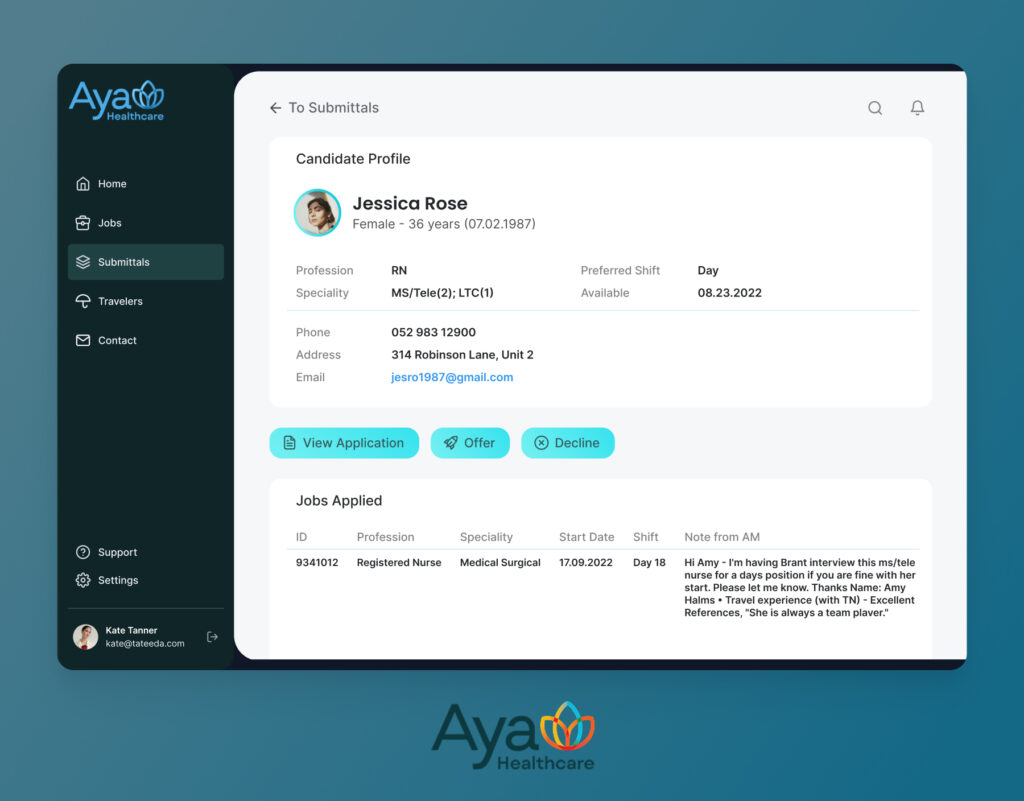
Table of Contents
What Problems Do Healthcare Patient Engagement Solutions Solve?
Across ambulatory groups, multi-facility systems, and specialty networks, disconnected portals and manual outreach create backlogs. Messages pile up; prior auths stall; patients miss visits or forget pre-op steps; call centers drown in “What’s my bill?” and “Is this covered?”
Tickets bounce between EHR, billing, and CRM. Healthcare patient engagement solutions attack these choke points with automation, context-aware outreach, and two-way workflows.
The stakes are high because engagement spans clinical and financial journeys. Missed reminders become empty slots; weak explanation of benefits becomes delayed payments; poor medication follow-up becomes readmissions.
Proper patient engagement platform integration unifies identity, consent, and context so communication lands at the right moment with the right data.
Key challenges (and why they persist):
- Identity sprawl: Patients juggle multiple portals with different passwords, then abandon accounts when they lock out. Front-desk teams spend precious minutes matching identities across systems, which slows check-in and fuels duplicate records.
- Fragmented scheduling: Booking still happens by phone in many facilities, so patients wait on hold without visibility into the queue. When a cancellation occurs, staff rework the calendar by hand, and open slots go unused.
- Coverage ambiguity: Before visits, patients guess at benefits and out-of-pocket costs. Staff retype demographics and insurance details into several systems, which introduces errors and sparks last-minute surprises at checkout.
- Message overload: Inboxes mix medication questions with address changes and billing disputes. Without triage rules or smart routing, clinical issues wait behind administrative requests, and response times balloon.
- Paper intake: Clipboards appear at the front desk, then someone rekeys forms into the EHR. Typos in names or meds propagate downstream, and clinicians lose time verifying basic facts during the encounter.
- No-show risk: Reminders arrive too late or on the wrong channel, so appointments slide by unnoticed. Patients who would reschedule if prompted never see a quick link to swap times, and the slot evaporates.
- Limited virtual touchpoints: Telehealth and remote monitoring tools often sit apart from the engagement record. Conversations vanish between systems, and the next clinician has no context for what happened off-site.
- Education gaps: Post-visit instructions hide inside dense PDFs that patients rarely revisit. Without nudges or progress tracking, adherence drifts and small complications turn into callbacks or readmissions.
- Payment friction: Patients cannot see a clear, itemized balance or choose a plan that fits their budget. Confusion drives phone calls to the billing office, and cash flow stalls while staff explain basics one by one.
- Analytics blind spots: Engagement clicks, confirmations, and replies stay trapped in separate databases. Operations teams cannot trace which messages work, so they keep sending what is familiar rather than what moves the needle.

Are You Familiar with These Issues in Your Organization?
Let us help you develop a custom patient engagement platform to get the issues resolved!
15 Reasons to Engage Patients Proactively
Patient engagement software development shines when the scenarios are concrete. Below are fifteen high-impact moments where software guides action and lifts outcomes.
- Pre-visit readiness: A patient receives an automated checklist with parking tips, prep steps, and consent links; completion status appears on the appointment card inside the patient engagement platform.
- Eligibility clarity: Before booking, an eligibility ping returns coverage details; patients see expected out-of-pocket ranges and choose a slot accordingly—classic patient self-scheduling software development value.
- Smart reminders: SMS and email patient reminder system development sends staggered nudges with tap-to-confirm; if a patient declines, the slot opens to a waitlist in seconds.
- Digital intake: Digital check-in and intake form software prefills demographics from prior visits; vitals and meds reconcile with the EHR after a quick patient review.
- Two-way triage: Secure two-way patient messaging app development routes symptoms to a nurse pool; severity scoring escalates to same-day telehealth when needed.
- Telehealth flow: Telehealth patient engagement software development creates a one-click join link; device checks run ahead of time; visit notes flow into the chart after consent.
- Medication follow-through: Patient education and adherence app development tracks reminders, confirms pick-ups, and flags missed doses for outreach.
- RPM loops: Remote patient monitoring engagement solutions watch thresholds for BP or glucose; unusual readings trigger a message and same-week nurse callback.
- Financial transparency: Patient billing and payment portal development shows line items, EOB context, and payment-plan sliders; balances drop without extra phone time.
- Language access: An AI chatbot for patient engagement development detects language preference, presents translated options, and hands off to staff only when needed.
- Care gaps: Analytics identify patients overdue for screenings; the system sends tailored nudges with self-booking links—direct patient engagement app development payoff.
- Provider matching: The portal suggests clinicians based on location and availability; patients see first openings across multiple sites—fewer dead ends.
- Family proxies: Parents or caregivers get authorized access and updates; task lists clearly separate patient versus proxy actions.
- Omnichannel continuity: Omnichannel patient engagement platform services preserve context when patients switch from SMS to web to call center.
- Operations feedback: Custom patient engagement analytics and dashboards display confirmation rates, reply times, and payment conversions; managers tune scripts and cadence.

Learn more: ➡️ AI-Smart Custom Ambulatory Software Development
10 Features That Matter Most in Patient Engagement Software
Patient engagement software development succeeds when feature design mirrors real workflows and trims costs for both sides.
- Unified identity and consent: SSO, biometrics on mobile, and granular proxies; consent records versioned and queryable. Patients move between apps, web, and telehealth without re-auth.
- Configurable scheduling with rules: Slot templates, resource pools, and rule sets for prerequisites; combined calendars across sites; APIs handle holds, swaps, and waitlists.
- Eligibility and benefits visibility: Insurance checks fire at booking; benefit summaries appear in plain language; staff see coverage flags inside the work queue.
- Two-way messaging with triage: Channels include app, SMS, and email; clinical vs. admin categories; workflows push threads to the right team; sentiment hints guide response order.
- Guided intake and documents: Smart forms adapt by visit type; camera capture for IDs and cards; structured outputs map cleanly to the chart.
- Telehealth connectors: Links launch native video or third-party services; pre-flight tests for camera, mic, and bandwidth; notes and billing codes post back automatically.
- Education and adherence tracks: Micro-lessons after discharge; quizzes for comprehension; adherence indicators surface on the provider dashboard.
- Payments and plans: Multiple tenders; card-on-file with tokens; plan builders for high balances; reminders timed to payroll cycles.
- Omnichannel orchestration: A rules engine sequences messages across channels; quiet hours; fallback paths if a channel fails.
- Analytics with drill-through: Dashboards for conversion, no-shows, and message outcomes; cohort filters by payer, location, or clinician; exports for finance and quality teams.
| Capability | What it solves | Tech notes | Cost impact |
| Identity & consent | Login friction; proxy confusion | OIDC, SSO, device biometrics; consent ledger | Fewer help-desk tickets; faster access |
| Scheduling rules | Empty slots; bad prep | Rules for labs, imaging, prerequisites; API holds | Higher fill rate; less overtime |
| Eligibility view | Surprise bills | Payer queries at booking; human-readable benefits | Fewer cancellations; quicker payment |
| Messaging & triage | Inbox overload | Channel routing; tagging; escalation pools | Shorter response cycles |
| Smart intake | Errors at check-in | Adaptive forms; card/ID capture; EHR mapping | Less rework; shorter visits |
| Telehealth | Missed virtual visits | Device pre-checks; auto-posting notes | More completed sessions |
| Education & adherence | Readmissions | Micro-content; adherence signals | Better outcomes; fewer calls |
| Payments & plans | Aged balances | Tokenized cards; plan builder | Better collections |
| Omnichannel | Fragmented threads | Rules across SMS, app, email; quiet hours | Lower no-shows |
| Analytics | Blind spots | KPIs, cohorts, exports | Better staffing and scheduling choices |
Are You Ready to Create Custom Patient Engagement Software?
Our team has been working with American clients for efficient healthcare products since 2013.
A Practical Plan for Patient Engagement Software Development
Patient engagement software development benefits from a plan that mixes architecture discipline with fast feedback.
- Discovery with measurable targets
Interview schedulers, call-center leads, revenue staff, and clinicians; document five measurable outcomes—no-show reduction, quicker eligibility confirmations, faster payment conversion, shorter intake, and higher message closure. - Data contracts first
Define canonical objects—Patient, Coverage, Appointment, Message, Payment, EducationTask; publish JSON schemas and versioning rules; reduce surprises later. - Identity, roles, and consent
Select OIDC provider; map roles to queues; model proxies and guardians; store consent snapshots with timestamps for audit. - Integrations that matter
Plan FHIR and HL7 patient engagement integration for demographics, appointments, orders, and results; add billing and CRM connectors via REST; secure with OAuth2 and mutual TLS. - Channel strategy
Decide which journeys use app versus SMS versus email; define quiet hours; create fallback patterns. This is the core of omnichannel patient engagement platform services. - Content and bot design
Draft message templates; wire up an AI chatbot for patient engagement development with guardrails; route escalations to human teams. - Scheduling logic
Build rules for prerequisites, provider preferences, and site capacity; expose APIs for portal and call center; this is the base of patient self-scheduling software development. - Payments blueprint
Tokenized cards; PCI-aware vendors; payment plans; reconciliation feeds back to billing—key to custom patient billing and payment portal development. - Telehealth and RPM hooks
Connect sessions to the engagement record; link telehealth patient engagement software development and remote patient monitoring engagement solutions so clinicians see context instantly. - Intake and forms
Design adaptive forms with conditional logic; e-sign with long-term retention; the essence of digital check-in and intake form software. - Messaging operations
Build a secure two-way patient messaging app development with queues, tags, SLAs, and canned replies; separate clinical and admin lanes. - Reminders and nudges
Implement SMS and email patient reminder system development with cadence testing; auto-open waitlisted slots; write-back confirmations. - Education tracks
Author modules for common procedures; schedule nudges; power patient education and adherence app development. - Analytics loop
Ship custom patient engagement analytics and dashboards; review weekly; adjust cadence and scripts. - Hardening and launch
HIPAA safeguards; DAST and SAST; failover tests; incident runbooks; staff training; progressive rollout by clinic or service line.

Learn more: ➡️ Hospital Management Software Development Services
Throughout the plan, teams may blend patient portal development services, patient engagement platform development, and patient engagement platform integration while selecting vendors for identity, messaging, and payments.
For organizations that prefer tailored control, custom patient engagement software development or custom patient engagement app development keeps UX and data contracts fully aligned with internal processes. If you need help across the stack, patient engagement software development services bring experienced engineers, product leads, and QA under one umbrella.
Conclusion: Get Your Patient Engagement Software Delivered
The strongest patient engagement software solutions do three things well: remove friction at every touchpoint; make communication timely and relevant; and close the loop with analytics that inform daily operations. Reaching that state calls for clear choices about identity, channels, software integration services, and content design. With that foundation, healthcare teams can improve engagement in practical ways: fewer no-shows, faster collections, better adherence.
TATEEDA supports the full journey: patient portal development services and mobile apps, plus data connections to clinical and billing systems. Our team applies custom patient engagement software development with modular components, selecting the mix of technologies and talent that matches your timeline and budget. Whether you are extending an existing platform or launching a new one, we build HIPAA-aligned solutions that scale across clinics and service lines without wasted effort or spend. Contact us today for help!





![8 Medical Billing Automation Developers in California [2026]](https://tateeda.com/wp-content/uploads/2026/10/Cover.png)
