How athenahealth EHR Integration Transforms Patient Data Workflows

Slava Khristich



Vlad Nazarov

Ambulatory clinics thrive on connected data. In this guide, you’ll learn why athenahealth integration matters, how athenahealth EHR integration slashes manual entry, and discover best practices for smooth deployments. Expect hands-on tactics to upgrade scheduling, patient engagement, and analytics with athenahealth integration services.
athenahealth stands out as a cloud-based EHR platform with an expansive API Marketplace. Many clinics experience hardships with disconnected patient charts, billing loops, and fragmented appointment books. Through athenahealth EHR integration and other related custom healthcare software development solutions, those silos dissolve as patient demographics, encounter notes and insurance eligibility sync automatically.
Technically, athenahealth integration means building secure OAuth2 clients that call RESTful endpoints, mapping JSON FHIR resources to your internal schemas, and orchestrating event subscriptions or webhooks. The goal: eliminate duplicate entry, enforce HIPAA-grade audit trails, and accelerate workflows.
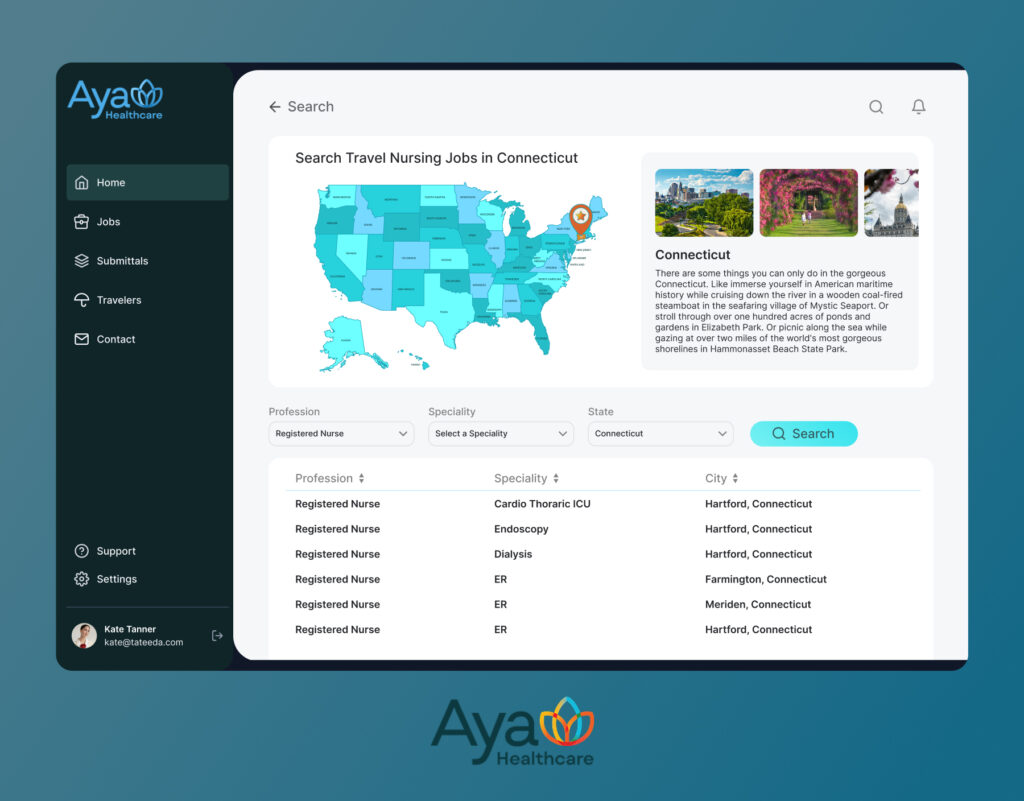
| Since 2013, TATEEDA has helped health providers across San Diego and California. We supported AYA Healthcare’s staff-management system overhaul with multiple EHR hooks (including athenahealth integration services), HL7 FHIR exchange, and rigorous compliance checks, so we know every twist of API integration. |
Learn more: ➡️ Custom EHR Software Development Services
Table of Contents
Core Capabilities Enabled by athenahealth Integration
Automated Appointment and Scheduling Sync
With athenahealth integration for scheduling, appointment slots, and provider calendars update instantly. System pushes FHIR Appointment resources into patient portals…no more double-bookings or stale waitlists. Clinics free staff from manual slot entry, and patients enjoy on-demand self-service booking interfaces. Advanced rules can enforce provider work hours, specialty matching, and buffer times, ensuring each booking respects clinical capacity and reduces patient wait times by up to 25%.
Seamless Clinical Data Exchange
Our athenahealth integration software connects lab results, medication lists, and discharge summaries into centralized dashboards. FHIR Observation and MedicationRequest payloads flow through secure pipelines, delivering critical insights without extra clicks. Clinicians review up-to-date records without toggling systems. Bi-directional sync ensures that updates made in your CRM or analytics tools write back to athenahealth, preserving a single source of truth for every patient encounter.
Omnichannel Patient Engagement
By adding athenahealth integration for patient engagement, you trigger SMS reminders, portal notifications, and personalized emails from a single CRM hub. Custom chatbots and AI agents handle FAQs, share after-visit summaries, and collect satisfaction surveys, boosting follow-up rates and reducing no-show penalties. Engagement data (opens, clicks, responses) feeds back into patient records, enabling segmentation by compliance risk or care plan adherence.
Revenue Cycle and Claims Automation
Through athenahealth EHR integration services, eligibility checks, claim submissions, and remittance notices travel from chart to clearinghouse without human intervention. Integration with RCM engines or RPM athenahealth integration modules slashes denial rates and compresses days-in-AR. Real-time feedback loops flag claim errors within minutes, while automated appeals workflows can recover 10–15% more revenue over baseline performance.

Learn more: ➡️ AI-Smart Custom Ambulatory Software Development
Who Needs athenahealth Integration and Why
Clinics and health systems pursue athenahealth integration services to unify disparate workflows, protect data accuracy, and accelerate patient access. Private practices gain instant visibility into eligibility and scheduling.
Small medical centers consolidate lab and imaging feeds under one portal. Urgent-care chains rely on live booking updates and rapid claims adjudication to handle high volumes with minimal staff overhead.
“Since we linked our client’s scheduling and billing workflows via athenahealth EHR integration, claim denials dropped by 30% and appointment fill rates climbed by 20% within six months. Our client now processes 40% more visits per week without additional headcount.”
— Slava K., CEO of TATEEDA
- Private Practices: Auto-sync patient demographics and appointment slots to reduce front-desk errors.
- Small Medical Centers: Aggregate lab results and imaging reports into a single view for faster diagnoses.
- Urgent-Care Clinics: Update availability and co-pay estimates on the fly to manage surges.
- Specialty Groups: Exchange infusion records or device data directly to support treatment plans.
Choosing an athenahealth Integration Partner
Selecting the right vendor matters. Look for expertise in athenahealth EHR integration services, FHIR mapping, and HIPAA compliance.
| Provider Type | Description | Ideal For |
| Allscripts Professional Services | Vendor-backed support for athenahealth integration and sandbox access | Athenahealth customers |
| Healthcare IT Consultancies | End-to-end CRM and EHR integration, custom workflows | Clinics needing full-stack support |
| Independent API Specialists | Focus on FHIR, HL7 mapping, and security audits | Teams with internal dev resources |
| Systems Integrators | Multi-vendor orchestration, RPA, and enterprise scaling | Health networks and hospital groups |

Need athenahealth EHR Integration for Your Practice?
TATEEDA will help you tie athenahealth EHR into your scheduling, billing and patient portal systems, cutting manual work and improving data accuracy.
Step-by-Step Plan for athenahealth Integration
Step 1: Define Objectives and Scope
Pin down which data streams matter, like appointments, clinical notes, eligibility, claims. Draft performance SLAs (e.g., “API calls must succeed within 200 ms at 100 TPS”). Engage stakeholders to validate priorities. Identify success metrics like reduced no-show rates or faster claim adjudication. Capture requirements in a confluence page to align product, ops, and compliance teams on scope.
Step 2: Provision Developer Access
Register for athenahealth Developer Program credentials. Obtain sandbox keys and sample FHIR bundles. Confirm endpoint URLs for staging and production. Ensure your team has client certificates and API documentation access. Establish versioning conventions for sandbox versus live endpoints in your CI/CD configs.
Step 3: Field Mapping and Workflow Design
Use a table to map athenahealth JSON fields to your data model:
| athenahealth Field | Target Field | Transformation Rule | Trigger (Webhook/Poll) |
| patientId | Patient.id | Direct map | POST /Patient created notification |
| appointmentStart | Booking.startTime | ISO 8601 parse | FHIR Subscription to Appointment |
| labResultValue | Observation.valueQuantity | Unit conversion (mg/dL ⇄ mmol/L) | Poll every 5 min |
Review with clinicians and coders to catch edge cases early. Store mapping docs in a shared Git repo and tag changes for audit purposes.
Step 4: Implement Integration Software
Build containerized microservices that call athenahealth REST APIs and handle FHIR bundles. Use RabbitMQ or Kafka for durable message queues. Secure endpoints via OAuth2 and JWT validation. Structure code into versioned modules, deploy via Helm charts and enforce trunk-based Git workflows.
Step 5: Automated Testing
Create Postman collections and CI jobs that validate CRUD on Patient, Appointment and Observation endpoints. Add JMeter load tests simulating peak clinic traffic. Integrate a FHIR validator library to confirm schema conformance. Export test artifacts to your central QA dashboard for executive visibility.
Step 6: Phased Deployment
Roll out via canary releases: pilot one clinic, monitor metrics, then expand. Leverage Kubernetes labels to route a percentage of traffic. Capture feature flags for toggling new integrations. Communicate staged launch plans and rollback procedures with IT and clinical leads.
Step 7: Monitoring and Continuous Improvement
Instrument Prometheus and Grafana dashboards tracking API latency, error rates, and queue depths. Set alerts (e.g., “> 1% failures over 10 min”). Analyze logs stored in Elasticsearch for anomalies. Hold monthly retrospectives; update runbooks and refine retry backoff algorithms as new patterns emerge.
The Final Word: Get Your athenahealth Integration Done
athenahealth EHR integration transforms data chaos into coordinated, data-driven operations. TATEEDA, a seasoned partner since 2013, empowers clinics with:
- Strategic API architecture and roadmap workshops
- Secure OAuth2 and FHIR connector development
- Scheduling, engagement, and billing workflow automation
- Comprehensive testing frameworks and compliance audits
- Post-launch support, training, and iterative enhancements.
Ready to upgrade? Contact us to discuss your next athenahealth integration project and unlock the full potential of your patient data.




![8 Medical Billing Automation Developers in California [2026]](https://tateeda.com/wp-content/uploads/2026/10/Cover.png)
