Yalantis Alternatives for Healthcare Development: Yalantis vs TATEEDA
Vlad Nazarov


Looking for Yalantis alternatives? Compare Yalantis and TATEEDA for wearable development, remote patient monitoring, and clinical integration.
Yalantis is worth considering if you need one partner to prototype a wearable, build its firmware, and connect it to patient and clinical software. TATEEDA is a strong alternative when you already have a device, a data feed, or a hardware partner and need to build the software around it. That can include a clinician dashboard, a mobile app, and connections to electronic health records (EHRs).
A working sensor gets you part of the way. Picture a patient wearing a heart monitor overnight. The device reconnects in the morning and uploads a batch of saved readings. What tells the clinician that the readings are from last night? Can the team see which records reached the chart and which remain in a queue? Bring that example to both interviews. It gets at the work that makes a connected device useful to a care team.
Table of Contents
Yalantis vs TATEEDA at a glance
| Decision point | Yalantis | TATEEDA |
|---|---|---|
| Where to start | A connected product that may need new hardware, firmware, and clinical software. | A device or data feed that needs a clinical application, an integration, or a software delivery team. |
| Public project example | Yalantis describes prototyping two cardiovascular wearables and building a companion app and HL7 connectivity for a US healthcare software vendor. | Our VentriLink case describes mobile software for medical staff that used the client’s wearable biosensor and server. |
| Public pricing signal, USD | Clutch lists $50 to $99 per hour and a minimum project size of $50,000+. | Our published range is $45 to $95 per hour, depending on role and seniority. |
| Geographic presence | Lists an R&D office in Warsaw and a US office in Long Beach, California. | Headquartered in San Diego, with engineering teams in Europe and Latin America. |
| What to ask first | Which team would own firmware, prototype testing, and the handoff to the device manufacturer? | Which team would own device data ingestion, the clinician app, and production integration support? |
Yalantis for wearable hardware and remote monitoring
Yalantis offers hardware design, embedded development, and software engineering. For a company creating a connected medical product, that means the team can discuss physical prototyping and the software that patients and clinicians will use in the same interview. Its healthcare portfolio includes integrations for devices already on the market.
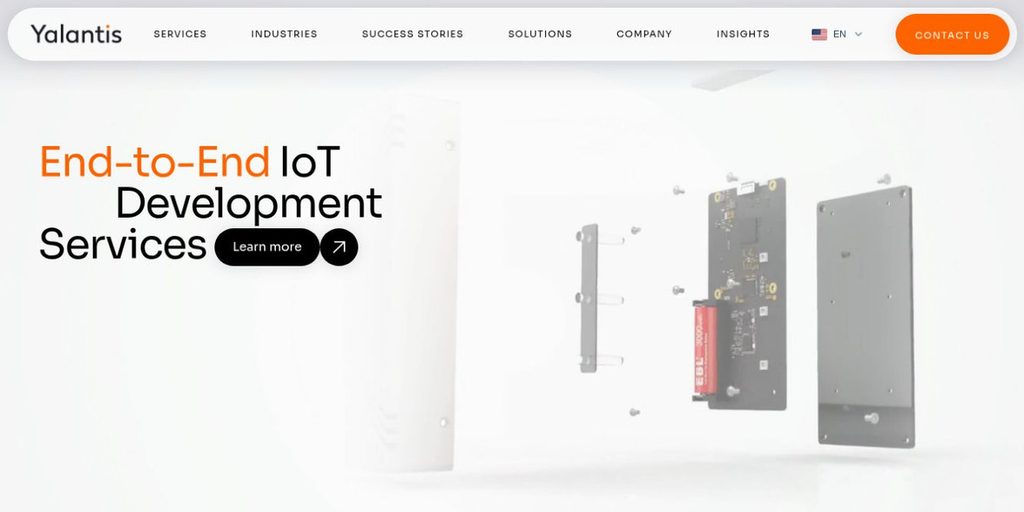
In a public case study, Yalantis describes making working prototypes of a chest-worn electrocardiogram (ECG) monitor and a wrist-worn blood oxygen and blood pressure tracker. The project also included a mobile app and software for sending device data to the client’s platform and hospital EHRs using HL7. If your product is still at the prototype stage, ask how that experience would apply to your hardware revision, connectivity constraints, and the clinical system you need to reach.
For buyers who care more about connecting multiple systems, there are separate examples. Yalantis describes connecting consumer wearable data sources such as Apple Watch and Fitbit to Healthfully’s patient app. In a different case for a health software company, it reports using a shared integration layer with vendor-specific adapters for Epic and Oracle Health. If your product will combine wearable data ingestion with more than one EHR connection, ask which parts of that experience would transfer and what each site would require.
On Yalantis’s site, Healthfully founder and COO Mark Boudreau credits the team’s “experience, responsiveness, value, and time to market.” That testimonial is useful alongside the project details. A reference call could give you a clearer picture of how the team works with a client’s engineers after launch.
Strengths. Yalantis offers hardware and software skills in one engagement, with published examples from new device prototypes to integrations around existing wearables.
What to clarify. Ask which deliverables you will own, including firmware source code, test files, and any reused modules. If manufacturing transfer or regulatory documentation is part of your plan, identify the responsible party and the specific handoff in your proposal.
TATEEDA for the software around an existing device
For VentriLink, our team joined a project with a wearable biosensor and an existing server. We built an iOS and Android application that pulled ECG data from the server and let medical staff review cardiograms and related events. The work included synchronization, changes to server-side data formatting, and quality assurance across tablet models.
VentriLink principal Dave Churchville said the team helped “get some key projects finished on time when our internal team was already at capacity.” That’s one example of the staffing model. We can also take on a defined application or integration workstream. Our healthcare software development services cover mobile applications, device SDK integration, and connections to other clinical software.
Other TATEEDA projects involving devices and delayed data
For a laboratory test instrument, we helped build operator software that controlled robotic equipment and displayed information about tests. The work involved the instrument and lab protocols. It is relevant if your software must respond to device states, tell users what happened during a run, or let them recover safely after a process stops.
A clinical assessment product presented a related software problem. Clinicians needed to capture assessments with limited connectivity and sync their work later. Our team moved the product to a browser-based architecture with offline data capture and synchronization. That example is useful when a monitoring workflow must tolerate a dropped connection, especially when staff need to distinguish what was recorded from what has reached the central system.
Strengths. We can work from a client-owned device and existing APIs, then build the software that makes the data available to clinicians. A dedicated team can join your engineers if they already own the hardware and backend.
What to clarify. VentriLink is a device-to-application example via the client’s server. If your scope includes charting in a particular EHR, bring the target site and data requirements into the discussion. For a new physical sensor, establish who owns the hardware work before scoping the software.
Decide what belongs in the clinical workflow
Start with who uses the second-by-second signal, who reviews it later, and what belongs in the chart. A cardiology team might need to inspect a waveform in a dedicated dashboard while the EHR shows a reviewed report. Another program might need selected measurements in the chart with a link to the original record. Agree on that destination with the care team before asking for a full integration quote.
| Design decision | What to ask each vendor to demonstrate |
|---|---|
| Capture time and delivery time | Reconnect a test device after an overnight outage. The display distinguishes when the device recorded the reading from when the platform received it. |
| Device reassignment | Move a test device from one patient account to another. The application keeps older readings with the correct patient and flags any ambiguous records for review. |
| Delayed or missing feed | Stop the test feed while keeping the dashboard open. Staff can tell which reading is current and whether the system is waiting for new data. |
| Chart handoff | Send the agreed summary or report to a test destination. Staff can see whether it arrived and who owns follow-up if it fails. |
Ask for the same demonstration from both companies with synthetic records. If each vendor needs different assumptions about what the device sends, agree on which inputs the team will build against before comparing delivery estimates. For a wearable still in development, ask how they will test the application while the physical device and firmware are still changing.
Price the device, the software, and the hospital connection
Yalantis’s figures come from Clutch, while our pricing page gives a company-published range. A prototype project may carry costs for hardware samples, testing, and specialist roles. A software integration may carry vendor fees, site-specific testing, and ongoing support. Ask which costs appear in each estimate and who pays third-party fees.
For the first milestone, give both teams a representative sample of the data and a target destination in the clinical workflow. Ask them to price the work in three parts:
- Collect. Show how data moves from the selected device or vendor feed into the application, including readings that arrive after a connection drops.
- Interpret. Show which details the system preserves so staff can recognize the patient, device, and original reading time. Identify where delayed or duplicate records surface.
- Deliver. Show how approved readings reach the dashboard or EHR and who investigates data that fails to arrive.
If you plan to support a second device or health system, ask which of those parts could be reused, what would require a new adapter, and how the next site would be tested. Our remote patient monitoring EHR integration guide walks through the software decisions in more detail.
Compare the ownership plan alongside the price
Request a short handoff plan for the first device and the first hospital. It should identify the owner of the device credentials, the data schema, firmware updates if applicable, interface mappings, and access to support logs. If your team will operate the integration, ask the vendor to show how staff can find a missing reading and tell a device problem from an application or EHR failure.
Frequently asked questions
Is TATEEDA a Yalantis alternative for remote patient monitoring?
TATEEDA is a Yalantis alternative for remote patient monitoring when your project needs a clinical app or integration around an existing device, server, or vendor API. If you need to engineer the physical wearable and firmware as part of the same contract, ask Yalantis to show comparable work.
Can both teams connect remote monitoring data to an EHR?
Both offer healthcare integration services. The scope depends on the site, the information it needs, and the interface it makes available. Confirm whether staff will see a summary, individual readings, or a link to a separate dashboard.
Can a wearable integration be reused across different hospitals?
Parts of it can be reusable. A shared mapping or device connection may carry over, while local credentials, patient matching, permissions, and site testing still require work. Ask both teams to show where the site-specific adapter begins and ends.
How do Yalantis and TATEEDA compare on hourly rates?
Clutch lists Yalantis at $50 to $99 per hour, with a listed minimum project size of $50,000+. TATEEDA publishes $45 to $95 per hour. Compare the proposed roles, hours, and third-party costs for your first milestone before choosing a partner.
Does Yalantis have a US office?
Yalantis lists an office in Long Beach, California. TATEEDA is headquartered in San Diego. Ask each company where delivery staff work and whether the proposed team can join device testing and hospital rollout sessions during your working hours.
If you have a device, an API, or a sample file and want to learn what it would take to put the data in front of clinicians, share it in your project fit assessment using a description or sample without patient identifiers.