Who Can Help a California Clinic Integrate AI with Its Existing EHR? 7 Companies to Consider

Slava Khristich


Vlad Nazarov

This guide helps California healthcare leaders compare development partners for adding AI to an existing EHR, with attention to the systems each team works with, the scope of a first project, and the trade-offs that matter in practice.
A California clinic looking for EHR-connected AI could start with TATEEDA or Bitcot for a focused custom workflow, Sidebench for a project that needs substantial clinical product design, or Pegasus One if connecting and preparing EHR data is the first obstacle. Azumo, Arkenea, and Saritasa offer other options depending on the AI work, application scope, and budget.
The search for a development partner often begins with a task staff already know takes too much effort:
- Intake: Patients submit information online, but staff still re-enter details or follow up on missing fields.
- Documentation: Clinicians want a draft they can review without assembling it from several sources.
- Scheduling: Appointment requests and confirmed changes need to stay in sync with the practice system.
- Staff questions: Policies and reference documents are hard to search when someone needs an answer.
- Billing: Resolving an exception means checking the EHR, coverage information, and claims system.
The right first project depends on which of these tasks you want to improve. An assistant that searches approved policies needs different data and permissions from one that drafts notes or changes appointments. Ask each potential partner how the workflow will operate in your systems, who reviews the AI’s output, and what happens when an update fails.
The seven companies appear in no particular order. TATEEDA is included because this is our blog; the comparisons are intended to help you judge its fit alongside the other options.
Table of Contents
What should the first AI and EHR integration do?
Choose a workflow that staff can test from beginning to end. A model demonstration may produce a convincing answer, but a useful clinic pilot also needs the right data, an approval step, and a clear destination for the result.
| Starting workflow | What the connection needs to handle | A useful first result |
|---|---|---|
| Patient intake | Forms, patient matching, coverage details, and uncertain fields | Staff receive a record they can check before accepting it |
| Documentation support | Encounter context, a draft note, and clinician review | The clinician can edit and approve a draft in the normal workflow |
| Staff knowledge assistant | Approved policies, reference documents, and user permissions | Staff can check the source behind an answer |
| Scheduling | Availability, appointment status, and confirmation | A confirmed change appears in the practice system |
| Billing support | Relevant notes, coverage, claim status, and exceptions | Billing staff can review a flagged issue with its supporting information |
The rest of the article compares companies against that practical question: who can connect the AI to the work your team already does?
Seven AI and EHR integration partners for California clinics
| Company | California connection | A good reason to contact them | Main scoping consideration |
|---|---|---|---|
| TATEEDA | San Diego | One custom workflow connecting EHR, AI, billing, or other existing tools | Define which systems and users belong in the first phase |
| Bitcot | San Diego | Patient-facing and administrative AI connected to major EHRs | Keep the first application or agent focused |
| Sidebench | Los Angeles | A clinician-facing product or specialty workflow that needs design as well as engineering | Decide how much product design the initial phase requires |
| Azumo | San Francisco | A technically demanding AI feature involving several types of healthcare data | Narrow the model and data architecture to the task |
| Arkenea | Serves California healthcare teams | A healthcare AI pilot beginning with structured discovery | Account for paid discovery and a larger typical project budget |
| Pegasus One | Fullerton | An interoperability layer to prepare EHR data for apps and agents | Compare platform fees and configuration with custom development |
| Saritasa | Irvine | A broader custom healthcare application with an AI component | Confirm that the initial budget fits the intended scope |
1. TATEEDA
Best fit: A clinic that wants to improve a single workflow while keeping its current EHR and related software.
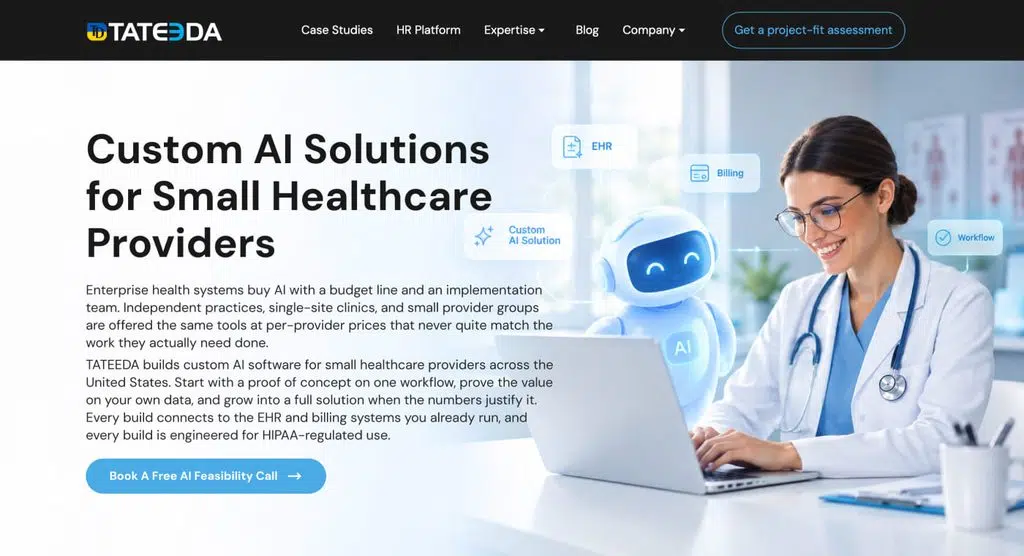
A practice may use one system for records, another for claims, and a third for patient communication. In that setting, the work is often in the handoffs: getting the right information to an assistant, letting staff review its output, and returning approved changes to the right place. TATEEDA’s San Diego team combines custom AI assistant development, EHR engineering, and software integration for projects of that kind.
A focused first phase could cover intake exceptions, documentation review, appointment changes, or a staff assistant. If the task calls for answers from approved internal documents, TATEEDA can build a healthcare RAG system with source references and access controls. Its San Diego presence and engineering resources in Eastern Europe and LATAM also give teams options for staffing the work as it grows. The practical question to settle early is which of the clinic’s systems must participate in the first release.
| First project | One defined EHR-connected AI workflow, assistant, or PoC |
| Minimum project size | $20,000; the proposal depends on the workflow and integrations |
| EHR and practice systems | Epic, Oracle Health/Cerner, athenahealth, Allscripts/Veradigm; API work involving eClinicalWorks, MEDITECH, NextGen, Greenway Health, and DrChrono |
| Billing and claims | Waystar, Optum, Change Healthcare, Experian Health, InstaMed |
| AI and data options | OpenAI, Azure OpenAI, AWS Bedrock, Google Cloud Healthcare API, Microsoft Azure Healthcare APIs, Nuance |
| Related business systems | Salesforce, Microsoft Dynamics 365, SAP, Workday |
| Integration methods | FHIR, HL7, REST APIs, webhooks, OAuth 2.0, custom connectors |
| RAG infrastructure | Options include pgvector, Pinecone, Weaviate, and Qdrant |
| Homepage | https://tateeda.com/ |
2. Bitcot
Best fit: Patient or administrative automation that needs both a usable application and an EHR connection.
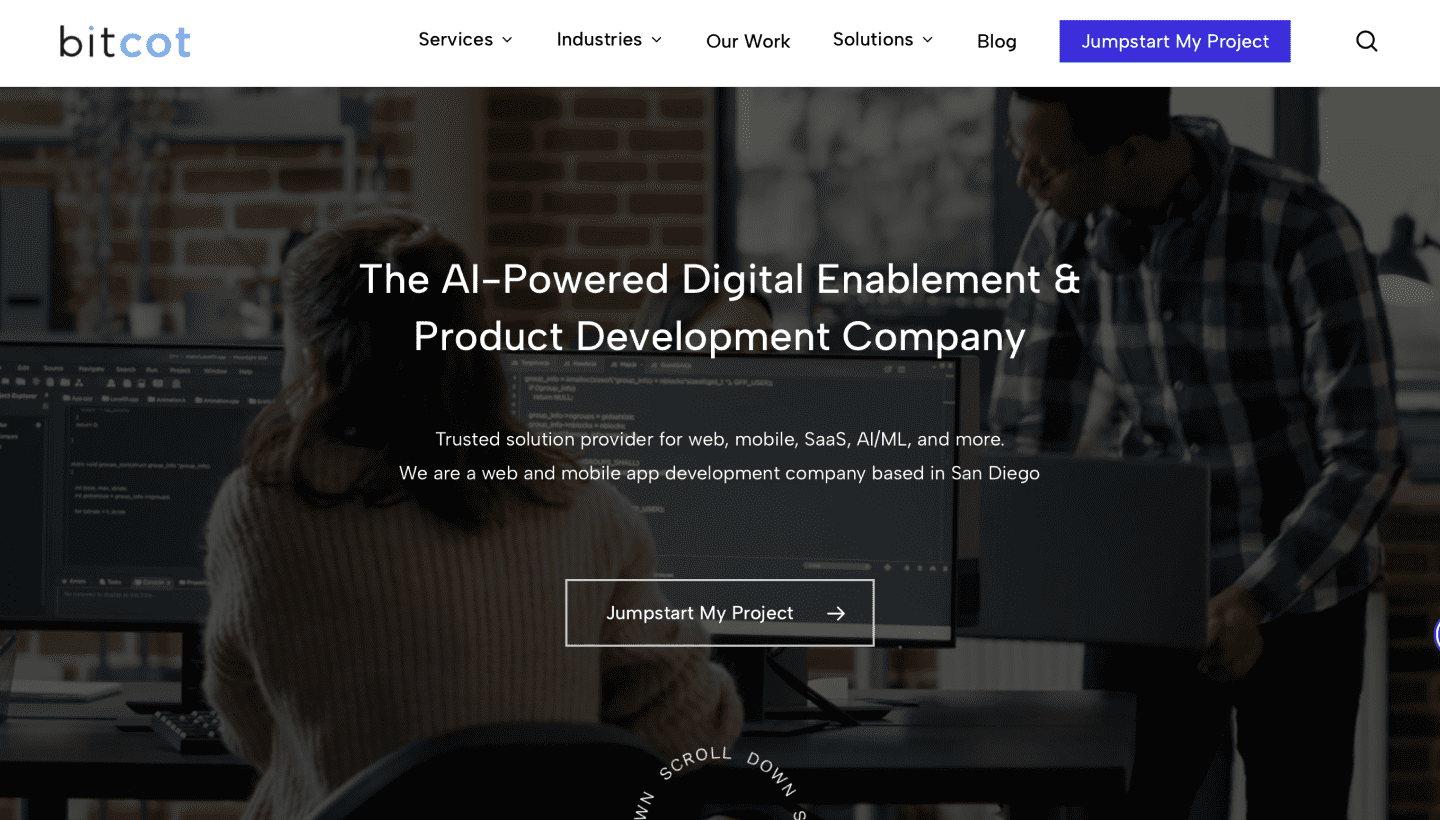
Bitcot works on healthcare applications as well as AI agents for intake, scheduling, claims, and related tasks. That combination could suit a clinic building a patient-facing assistant or a staff tool that needs to perform actions in another system.
Its EHR work covers Epic, Oracle Health/Cerner, and athenahealth through FHIR R4, HL7 v2, and SMART on FHIR. Bitcot also works with several agent and model platforms. For an initial project, the important choice is whether the clinic needs a new application, an AI feature inside an existing one, or a narrower integration between systems.
| EHR platforms | Epic, Oracle Health/Cerner, athenahealth |
| AI and agent tools | OpenAI, Claude, Azure OpenAI, AWS Bedrock, LangGraph, CrewAI, Copilot Studio |
| Other workflow tools | Twilio, Rasa, Botpress, Power Automate |
| Integration methods | FHIR R4, HL7 v2, SMART on FHIR, OAuth 2.0 |
| Sensible first scope | One intake, scheduling, claims, or EHR-search journey |
| Homepage | https://www.bitcot.com/ |
3. Sidebench
Best fit: A clinician-facing tool where usability and the review process matter as much as the integration.
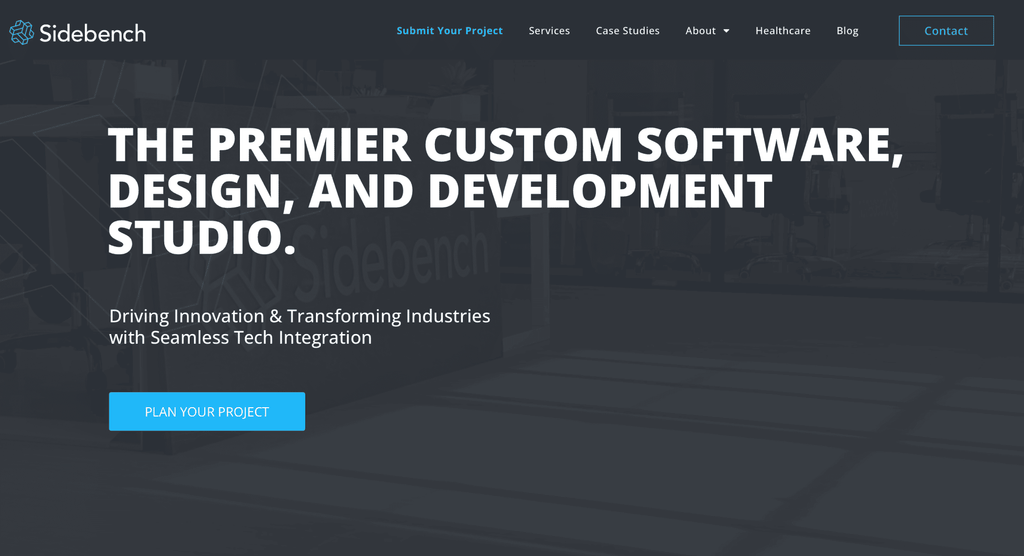
Sidebench brings product design and healthcare engineering together. Its EHR experience includes Epic, Cerner, and athenahealth, as well as CentralReach and CharmEHR. Those specialty systems may be particularly relevant when a practice’s workflow cannot be reduced to a standard patient chart and appointment schedule.
Sidebench’s approach to healthcare AI favors bounded tasks with a person reviewing the result before it reaches the record. That fits documentation support and other work where clinicians need to see and correct an output. A smaller clinic should decide whether it needs the full product design process at the outset or a more limited integration first.
| EHR platforms | Epic, Cerner, athenahealth, CentralReach, CharmEHR |
| Other healthcare platform | Salesforce Health Cloud |
| AI environment | Amazon Bedrock for supervised healthcare AI workflows |
| Integration concerns | User access, audit trails, review steps, and specialty data structures |
| Sensible first scope | A clinician-reviewed documentation or specialty care workflow |
| Homepage | https://sidebench.com/ |
4. Azumo
Best fit: A project with a substantial AI engineering component, such as an agent, prediction workflow, or document-processing feature.
Azumo works with EHR data alongside lab results, medical images, and patient-generated information. Its healthcare offering includes AI integration with Epic and Cerner. That range is useful when an assistant must draw on more than one type of clinical information or when the model behavior itself needs considerable development.
The technology choices are broad. A clinic will get a clearer proposal by bringing Azumo a defined task, representative input types, and a decision about which actions require staff approval. That gives the team a basis for choosing a model and architecture without expanding the pilot into a general AI platform.
| EHR platforms | Epic, Cerner |
| Healthcare inputs | EHR data, lab results, imaging, patient-generated data |
| AI and orchestration | OpenAI, Claude, Llama, LangChain, LangGraph, CrewAI |
| Data and deployment options | Pinecone, Weaviate, pgvector, AWS Bedrock, Azure AI, Google Vertex AI |
| Sensible first scope | One data-heavy AI feature with defined review and record-update rules |
| Homepage | https://azumo.com/ |
5. Arkenea
Best fit: A healthcare-specific generative AI pilot with a formal discovery phase.
Arkenea develops healthcare software and AI features for such tasks as intake, staff support, and clinical documentation. It can also add AI to an existing application, which may suit a provider or healthtech team that already has a product and wants to extend it.
Its EHR integrations cover Epic, athenahealth, and Oracle Health through FHIR and HL7. Arkenea starts with paid discovery, then scopes the build. Its generative AI projects typically fall between $50,000 and $250,000, with focused pilots toward the lower end. That is useful budget context for a buyer seeking a defined specification before development, and an important threshold for a smaller clinic to consider early.
| EHR platforms | Epic, athenahealth, Oracle Health |
| AI models | OpenAI GPT, Claude, Gemini, Llama |
| Deployment options | Azure OpenAI, AWS Bedrock, Google Cloud Vertex AI |
| Integration methods | FHIR, HL7 |
| First engagement | Paid discovery, followed by a scoped pilot or production build |
| Typical generative AI project | $50,000–$250,000, depending on scope |
| Homepage | https://arkenea.com/ |
6. Pegasus One
Best fit: A team whose immediate problem is connecting, cleaning, and delivering EHR data to an application or AI agent.
Pegasus One offers custom development, but its Segue interoperability platform is the distinctive option here. Segue connects clinical sources, maps and validates data, and sends the resulting record to an application, warehouse, report, or agent. For a clinic or healthtech team that needs a dependable data path before building AI features, that sequence may make sense.
Segue covers Epic, Oracle Health, athenahealth, and eClinicalWorks. Its $250-per-month design partner tier includes 5,000 transactions per month; custom connectors, deployments, and agents need their own scope. Compare that route with custom development by looking at your required connectors, who will maintain the pipelines, and where the clinic wants the data to live.
| EHR platforms | Epic, Oracle Health, athenahealth, eClinicalWorks |
| Data preparation | FHIR pipelines, mapping, terminology validation, de-identification |
| AI connection | Data delivery to agents, with MCP and orchestration options |
| Deployment | Customer cloud/VPC option |
| Starting platform tier | $250 per month for 5,000 transactions; custom work scoped separately |
| Homepage | https://www.pegasusone.com/ |
7. Saritasa
Best fit: A larger custom healthcare application in which AI is one feature among several.
Saritasa develops healthcare software that can connect with EHRs, laboratory systems, and imaging systems. It also builds AI features using language models, speech tools, and document processing. A provider planning a new clinician or patient application may value having that work handled within one development project.
If the clinic only wants a small addition to an existing EHR workflow, discuss budget and boundaries immediately. Saritasa’s AI projects generally start at $50,000. A basic AI integration may take six to eight weeks, while a broader application or more involved data flow will need its own schedule.
| Clinical systems | EHR, LIS, and PACS connections |
| AI models and tools | ChatGPT, Claude, Gemini, Llama; speech and document-processing options |
| Healthcare data methods | HL7, FHIR, DICOM, ICD, LOINC |
| Sensible first scope | One AI feature within a defined healthcare application |
| Starting AI project budget | Generally $50,000; timing depends on the integration |
| Homepage | https://www.saritasa.com/ |
How to choose a partner for your first workflow
The platform lists help you identify relevant experience. They cannot tell you how much work your integration requires. Two clinics using the same EHR may have different interfaces, permissions, older systems, or approval processes.
Give each shortlisted company the same short brief and compare the answers:
- Describe the task as staff perform it today. Identify the starting screen or system, the information staff check, and the decision they make.
- Separate reading from changing data. Say whether the AI will retrieve information, prepare a draft, create a task, or update the EHR. Mark the point where a person must approve its work.
- List every system in that one task. Include the EHR, practice management tool, claims platform, document store, or messaging service only if the workflow uses it.
- Ask for a complete first release. The proposal should include access, testing, review, failed transactions, and what staff will see when the AI cannot finish.
- Choose a measure the clinic can check. Examples include time spent reviewing intake exceptions, the share of drafts clinicians accept after editing, or the number of appointment changes completed correctly.
A tightly scoped release can still be substantial engineering work. It gives the clinic a way to judge the result before expanding AI into another workflow.
FAQ
Does a clinic need custom development if its EHR already offers AI features?
Sometimes the built-in feature covers the task. Custom development is more useful when the workflow crosses systems, depends on clinic-specific rules, or needs an experience the EHR does not provide. Start by comparing the existing feature against the complete task staff perform.
Can an AI pilot begin without live patient data?
Yes. A team can use synthetic or de-identified examples to test the interface and much of the workflow. Before going live, it still needs to verify permissions, data handling, and performance with the real types of records the clinic uses.
Is connecting to Epic or athenahealth enough to guarantee a quick start?
No. The clinic’s configuration, available interfaces, access approvals, and intended actions affect the work. Ask for an integration assessment tied to your installation and workflow before relying on a delivery date.
When does a RAG assistant make more sense than an EHR-connected agent?
A RAG assistant fits a task such as finding answers in approved policies, procedures, or reference material. An agent needs additional integration when it must check live patient or appointment data or carry out an action in another system. Some projects need both, with different permissions for each step.
What should the first proposal include beyond the AI feature?
Look for the EHR connection, user access, test data, staff review, error handling, audit information, deployment, and support after launch. A proposal that only covers the model or chat interface leaves much of the clinic workflow unresolved.




![Healthcare Staffing and Credentialing AI Software Developers [2026]](https://tateeda.com/wp-content/uploads/2026/10/Cover-img.png)
![10 Healthcare Data Engineering Companies for AI-Ready EHR Data [2026]](https://tateeda.com/wp-content/uploads/2026/10/Cover-image-6.png)
![8 Healthcare RAG Development Companies in California [2026]](https://tateeda.com/wp-content/uploads/2026/10/Cover-img-2.jpg)